Stories from Ars Technica
Neutral news, free from political spin and bias.
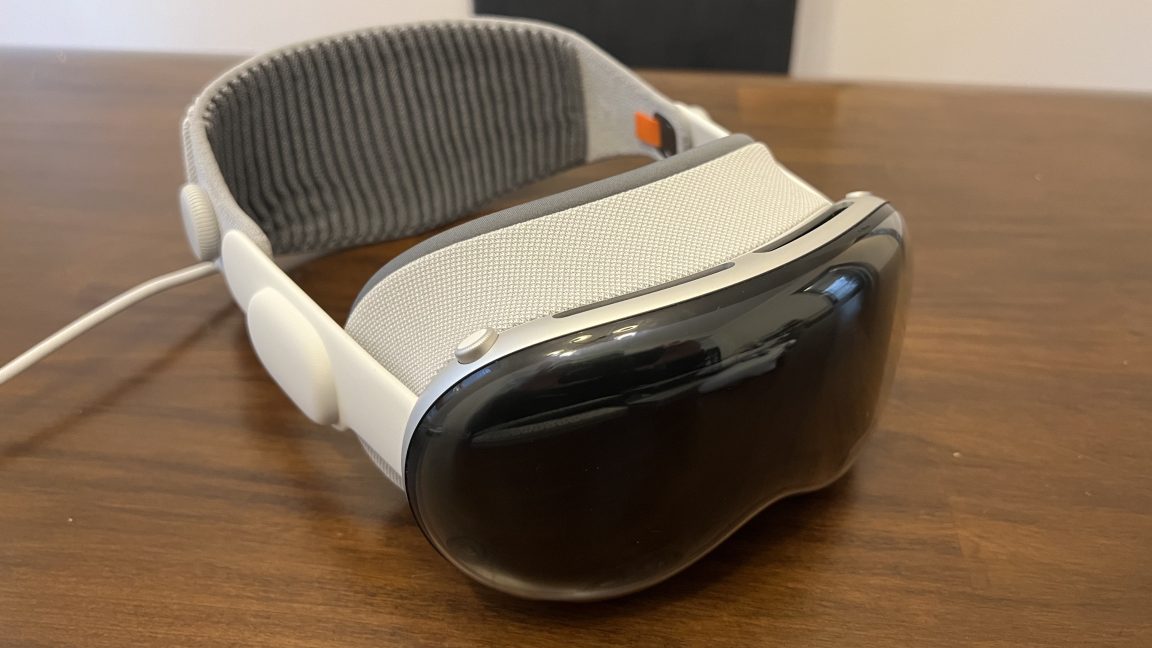
Valve releases Steam Link app for Apple Vision Pro headset
Valve releases Steam Link app for Apple Vision Pro headset
Valve’s Steam Link app is now available for Apple’s Vision Pro headset, allowing users to stream traditional 2D Steam games from a Mac or PC over a local network. The app does not support VR games, and no future compatibility for SteamVR has been announced. The release aligns with previous Steam Link versions for other Apple devices.
Source Analysis
The original Ars Technica article exhibits mild framing bias with subtle loaded language and minor omissions, but remains largely factual. It leans slightly toward a tech-enthusiast perspective, emphasizing potential future developments while downplaying the current limitations of the Steam Link app on Vision Pro. The tone is conversational but not overtly emotional or partisan.
View Article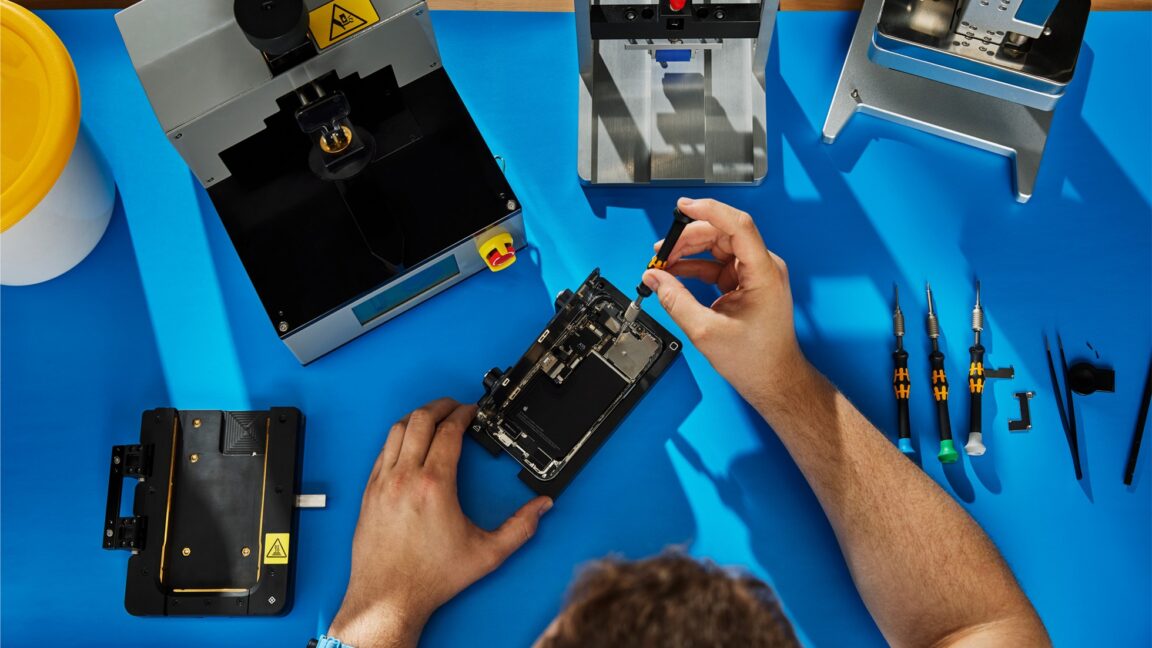
Report evaluates laptop and smartphone repairability, with Apple and Lenovo scoring lowest
Report evaluates laptop and smartphone repairability, with Apple and Lenovo scoring lowest
A consumer advocacy group’s report ranked Apple and Lenovo among the least repairable laptop brands, using France’s mandatory repairability index as a basis for evaluation. The analysis focused on disassembly ease, repair documentation, and spare parts availability, with Apple receiving low scores in both laptop and smartphone categories. The findings align with broader right-to-repair advocacy efforts.
Source Analysis
The original Ars Technica article exhibits moderate framing bias, with a clear emphasis on Apple's poor performance and a subtle advocacy tone for right-to-repair policies. While it remains factually accurate, the language and omissions subtly steer the reader toward a critical view of Apple and Lenovo, aligning with the advocacy goals of PIRG. The neutral version removes evaluative phrasing and provides broader context, reducing the emotional and persuasive undertones.
View Article
OpenAI CEO Sam Altman discusses AI development and future possibilities
OpenAI CEO Sam Altman discusses AI development and future possibilities
OpenAI CEO Sam Altman has outlined a vision for AI-driven automation in a widely read blog post, highlighting potential benefits like accelerated technological progress through robotics and self-reinforcing production cycles. The discussion centers on long-term optimism but provides limited analysis of risks or implementation challenges.
Source Analysis
The original Ars Technica article employs heavy sarcasm, dismissive framing, and loaded language to undermine Sam Altman’s AI optimism, portraying his ideas as naive, hype-driven, and lacking substance. It omits balanced context about AI’s potential benefits or industry-wide debates, instead focusing on mockery and emotional appeals (e.g., comparing Altman’s vision to a 'stoned teen’s sci-fi novel'). The neutral version, by contrast, presents the same content as a factual summary without evaluative judgment.
View Article
Bluesky social network experiences service disruption amid user speculation about development practices
Bluesky social network experiences service disruption amid user speculation about development practices
Bluesky faced a service outage on Monday, which the company linked to an external provider. Some users speculated without evidence that the issue stemmed from AI-assisted coding practices, a claim that spread through posts and memes on the platform.
Source Analysis
The original Ars Technica article leans into a playful, mocking tone that amplifies user speculation as a central narrative, framing Bluesky's outage through the lens of a viral meme ('vibe coding') rather than technical facts. It omits contextual details about Bluesky's broader reliability history and lacks balance by treating user jokes as quasi-serious allegations, while the neutral version grounds the story in verifiable patterns and clarifies the speculative nature of claims.
View Article
Supreme Court rules ISPs not liable for contributory copyright infringement in two cases
Supreme Court rules ISPs not liable for contributory copyright infringement in two cases
The U.S. Supreme Court overturned two appellate rulings that had held ISPs liable for contributory copyright infringement, clarifying that providers are not automatically responsible for subscriber piracy. The decisions involve lawsuits by major record labels against Grande Communications and Cox Communications, with the court stating that offering general internet service does not constitute infringement without additional evidence.
Source Analysis
The original Ars Technica article exhibits moderate pro-ISP/pro-tech framing with loaded language that subtly portrays copyright holders as overreaching and ISPs as victims of unfair legal pressure. While factually accurate, it omits key context about the record labels' arguments and frames the rulings as a clear win for ISPs without exploring nuanced legal implications or the broader copyright enforcement debate.
View Article
Study evaluates accuracy of Google's AI Overviews in search results
Study evaluates accuracy of Google's AI Overviews in search results
A study by *The New York Times* and AI startup Oumi found that Google’s AI Overviews, which summarize search results, answer questions correctly about 90% of the time, up from 85% in a prior test. While most responses are accurate, the analysis indicates a portion contains errors, which could scale to millions of incorrect summaries daily given Google’s search volume. The evaluation used OpenAI’s SimpleQA benchmark, a standardized set of verifiable questions.
Source Analysis
The original Ars Technica article employs **sensationalized framing** and **loaded language** to portray Google's AI Overviews as systematically unreliable, emphasizing errors ('millions of lies per hour') while downplaying improvements and methodological nuances. It **omits key context** about the study's limitations (e.g., SimpleQA's biases, Oumi's potential conflicts of interest) and **lacks balance** by not including Google’s perspective or broader industry standards for AI accuracy. The tone leans toward **alarmism**, amplifying the 10% error rate as a failure rather than a benchmark typical of cutting-edge AI systems.
View Article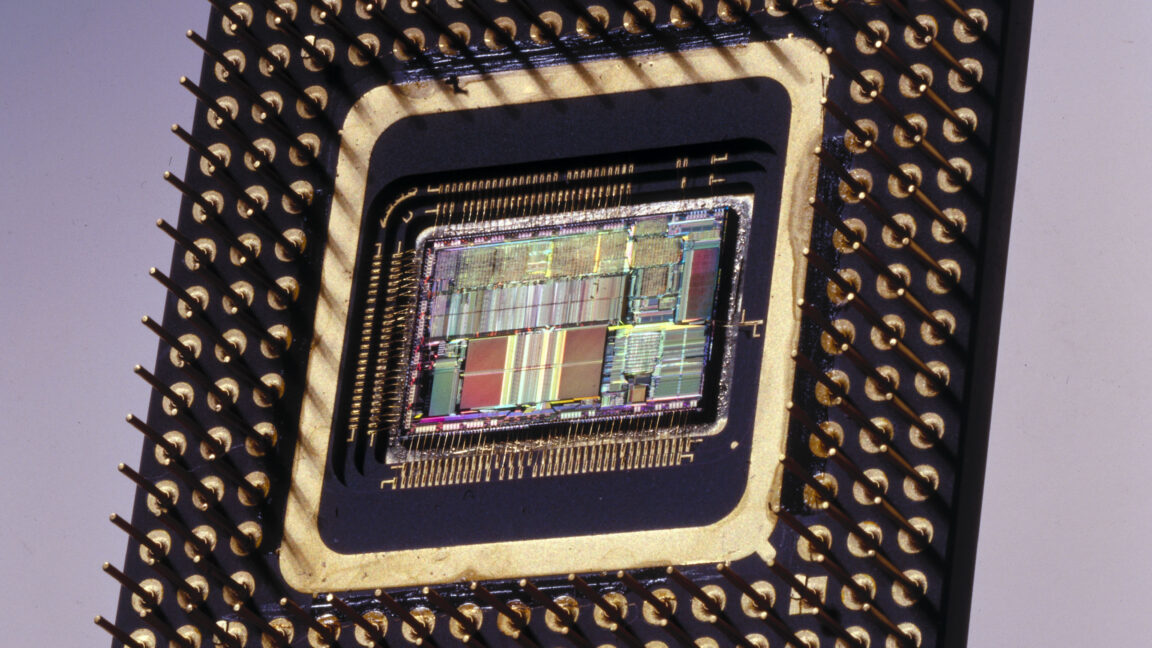
Linux kernel to drop support for Intel 486 processors in upcoming release
Linux kernel to drop support for Intel 486 processors in upcoming release
The Linux kernel will drop support for Intel’s 486 processor in version 7.1, marking the end of compatibility for the 1989-era chip. The decision follows years of deprecation discussions, as maintainers prioritize modern hardware and reduce legacy code maintenance. Later x86 architectures remain unaffected by the change.
Source Analysis
The Ars Technica article leans toward a *progressive-tech* framing, emphasizing the inevitability of obsolescence and the 'cost' of legacy support, while subtly downplaying the historical significance of the 486. It uses mildly loaded language to portray the removal as a pragmatic, overdue decision, but omits broader context about the implications for retro computing or embedded systems. The tone is more conversational and opinionated than the neutral version, though not overtly biased.
View Article
NASA’s Artemis II mission transmits high-resolution lunar images to Earth
NASA’s Artemis II mission transmits high-resolution lunar images to Earth
NASA’s Artemis II mission completed a lunar flyby on Monday, with astronauts capturing high-resolution images later transmitted to Earth via an optical data link. The images, including views of Earth rising behind the Moon, were published on NASA’s Flickr account as part of the agency’s broader Artemis program.
Source Analysis
The original Ars Technica article leans toward a more enthusiastic, emotionally charged tone with subtle framing choices that emphasize spectacle over technical context. While not overtly biased, it omits broader mission goals and technological details present in the neutral version, and uses loaded language to heighten reader engagement ('exceptional,' 'stunning').
View Article
Rivian R2 SUV receives EPA range estimates ahead of launch
Rivian R2 SUV receives EPA range estimates ahead of launch
Rivian’s upcoming R2 SUV has received EPA range estimates of 335 miles with 21-inch wheels and 314 miles with 20-inch all-terrain tires. The midsize electric SUV, priced starting at $57,990 for the Performance trim, is set to begin deliveries this year, with a lower-cost Premium trim planned for late 2026. Both versions use an 87.9 kWh battery pack.
Source Analysis
The original Ars Technica article exhibits moderate framing bias with enthusiastic language that subtly promotes Rivian's narrative, while omitting some contextual details present in the neutral version. It leans toward a positive portrayal of Rivian’s achievements and market positioning, though it avoids outright misinformation or extreme emotional appeals.
View Article
Intel revives New Mexico facility for advanced chip packaging expansion
Intel revives New Mexico facility for advanced chip packaging expansion
Intel has reopened a shuttered chip plant in New Mexico, investing heavily in advanced packaging technology to compete in the semiconductor foundry market. The move follows $500 million in U.S. CHIPS Act funding and aligns with growing demand for AI and custom chip solutions.
Source Analysis
The original Ars Technica article exhibits moderate framing bias through vivid storytelling (e.g., raccoons, 'growth spurt') and subtle emotional appeals (e.g., 'quietly fast-growing,' 'grab a bigger slice of the AI pie'). While factually accurate, it omits neutral context like Intel's lack of disclosed customer contracts and overemphasizes competitive tension with TSMC without proportional counterpoints. The tone leans toward a tech-enthusiast narrative rather than a strictly neutral report.
View Article
Artemis II crew completes lunar flyby, transmits imagery during mission
Artemis II crew completes lunar flyby, transmits imagery during mission
NASA’s Artemis II crew completed a lunar flyby on Monday, with commander Reid Wiseman describing the Moon’s appearance during an eight-hour approach. The Orion spacecraft transmitted live video and high-resolution images, constrained by deep-space bandwidth, as part of a test mission for future lunar landings.
Source Analysis
The original Ars Technica article leans heavily into emotional and awe-inspiring language, framing the Artemis II mission as a breathtaking spectacle rather than a technical milestone. It omits key contextual details about the mission's objectives, systems testing, and broader program goals, instead focusing on the astronauts' visceral reactions and the Moon's visual grandeur. This creates a more dramatic, human-interest narrative at the expense of scientific and operational depth.
View Article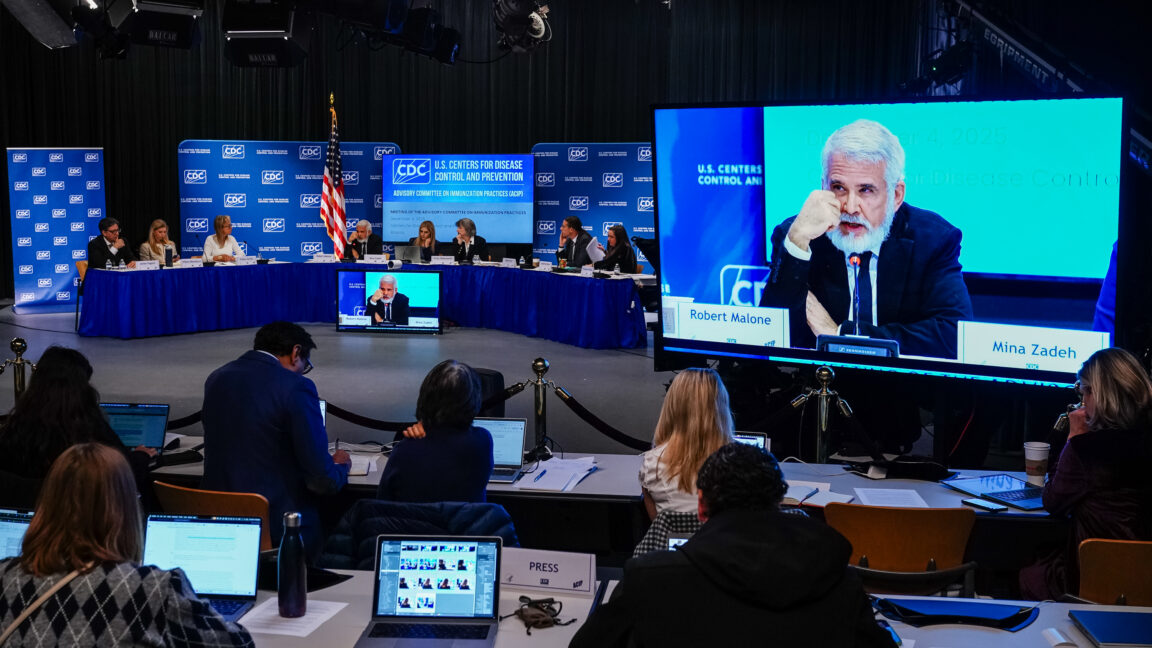
CDC vaccine advisory panel charter amended following court ruling on membership changes
CDC vaccine advisory panel charter amended following court ruling on membership changes
Health Secretary Robert F. Kennedy Jr. has amended the charter of the CDC’s vaccine advisory panel after a federal judge blocked his recent appointees, citing insufficient expertise and lack of balanced representation. The revisions modify membership selection criteria for the Advisory Committee on Immunization Practices, which advises on US vaccine policies.
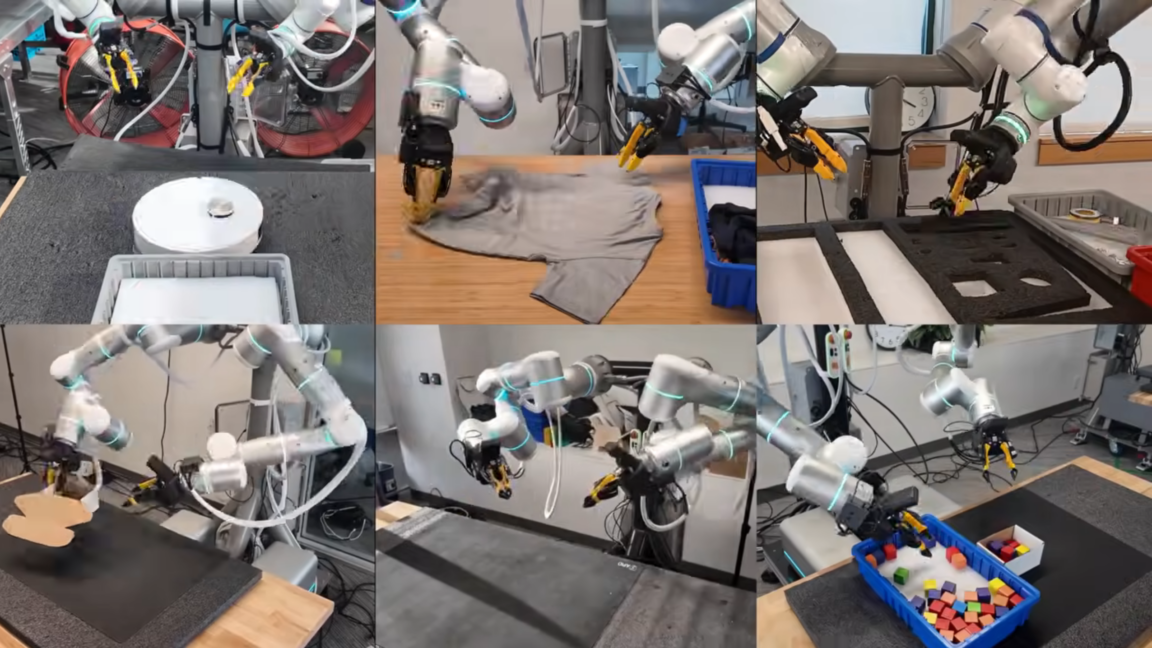
Generalist introduces GEN-1 robotics model with reported high reliability in physical tasks
Generalist introduces GEN-1 robotics model with reported high reliability in physical tasks
Generalist has launched GEN-1, a robotics AI model claiming 99% reliability in manual tasks like folding and repairs. The system uses sensor-equipped 'data hands' to collect extensive human interaction data, building on earlier research into scaling laws for robotic training.
Source Analysis
The original Ars Technica article exhibits moderate framing bias, primarily through enthusiastic loaded language and a promotional tone that amplifies Generalist's claims without critical scrutiny. While it retains core factual details, the omission of caveats (e.g., independent verification of the 99% reliability) and the unquestioning adoption of the company's perspective contribute to a tech-optimistic slant.
View Article
Federal court upholds CFTC jurisdiction over sports-related prediction markets in New Jersey case
Federal court upholds CFTC jurisdiction over sports-related prediction markets in New Jersey case
A federal appeals court ruled that New Jersey cannot regulate sports-related prediction markets operated by CFTC-registered firm Kalshi, affirming the agency’s exclusive jurisdiction under the Commodity Exchange Act. The decision blocks state enforcement of gambling laws against Kalshi’s event contracts, which allow trading on sports outcomes, while leaving broader questions about sports betting untouched.
Source Analysis
The original Ars Technica article exhibits moderate framing bias, primarily through selective emphasis on jurisdictional conflict and omission of contextual details about Kalshi's regulatory status. While not overtly partisan, it subtly frames the ruling as a *state vs. federal* power struggle rather than a technical legal question, with loaded phrasing like 'exempt from state laws' and 'won a preliminary injunction' that implies a zero-sum victory. The neutral version provides broader context and avoids value-laden phrasing, reducing the adversarial tone.
View Article
2027 U.S. Budget Proposal Includes Substantial Reductions for Science Agencies
2027 U.S. Budget Proposal Includes Substantial Reductions for Science Agencies
The U.S. administration’s 2027 budget proposal includes major cuts to science agencies, with the NSF, EPA, and NIST facing reductions of 50% or more, while NIH would lose $5 billion. The plan mirrors last year’s request, which Congress largely rejected, signaling continued disagreement over federal research funding.
Source Analysis
The original Ars Technica article exhibits strong partisan framing, using emotionally charged language to portray the budget proposal as a politically motivated attack on science. It omits key contextual details (e.g., congressional resistance, lack of implementation specifics) and leans heavily on adversarial rhetoric, positioning the administration as hostile to scientific progress while downplaying the procedural reality of budget negotiations.
View Article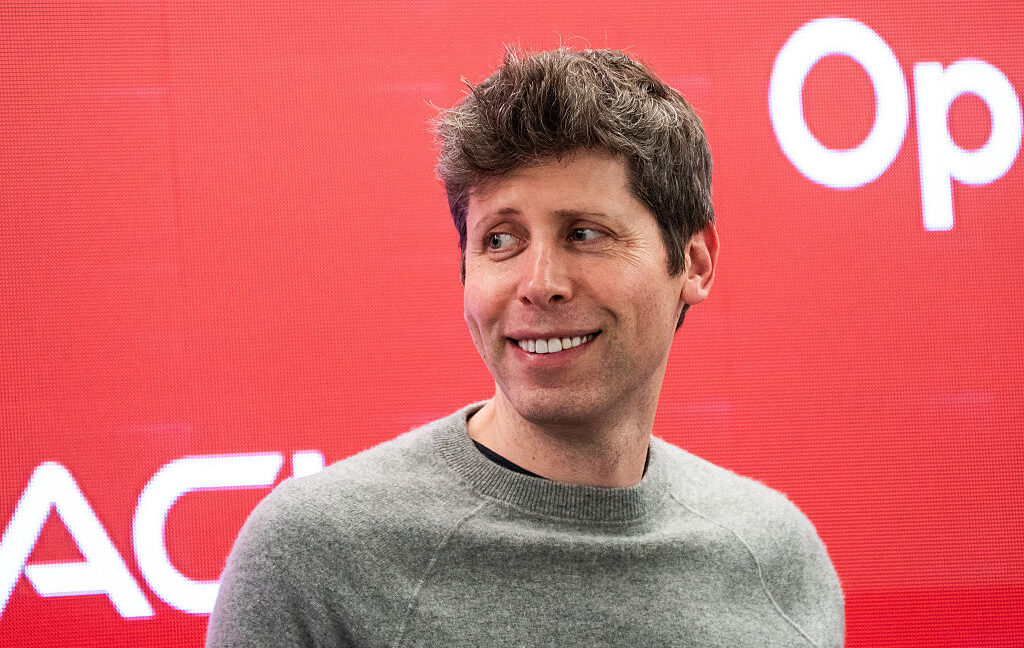
OpenAI releases AI governance proposals amid leadership scrutiny
OpenAI releases AI governance proposals amid leadership scrutiny
OpenAI released policy recommendations for governing advanced AI systems, emphasizing risk mitigation and human-centric development. The announcement followed an investigative report examining internal concerns about the alignment between the company’s leadership decisions and its stated mission.
Source Analysis
The original Ars Technica article employs strong emotional framing and loaded language to cast doubt on Sam Altman's trustworthiness, while omitting key details about OpenAI's policy proposals and the nuanced nature of the *New Yorker* investigation. The piece leans heavily into a narrative of skepticism, amplifying internal dissent without proportional context or counterbalancing perspectives, which contrasts sharply with the neutral version's focus on factual reporting and balanced presentation of both the proposals and leadership scrutiny.
View Article
NASA Advances Artemis Program as Lunar Lander Development Continues
NASA Advances Artemis Program as Lunar Lander Development Continues
NASA’s Artemis II mission has progressed as planned, with the Orion spacecraft and SLS rocket performing as expected ahead of reentry. Meanwhile, the agency has adjusted requirements for its lunar landers—developed by SpaceX and Blue Origin—to accelerate their timelines by removing a mandatory docking step with the Lunar Gateway.
Source Analysis
The original Ars Technica article exhibits moderate framing bias with a slightly optimistic and conversational tone, emphasizing progress and downplaying uncertainties. While it omits some technical and contextual details present in the neutral version, it avoids overt emotional appeals or partisan lean. The piece subtly frames NASA's decisions as pragmatic and forward-thinking, with a focus on 'getting there' rather than potential risks or challenges.
View Article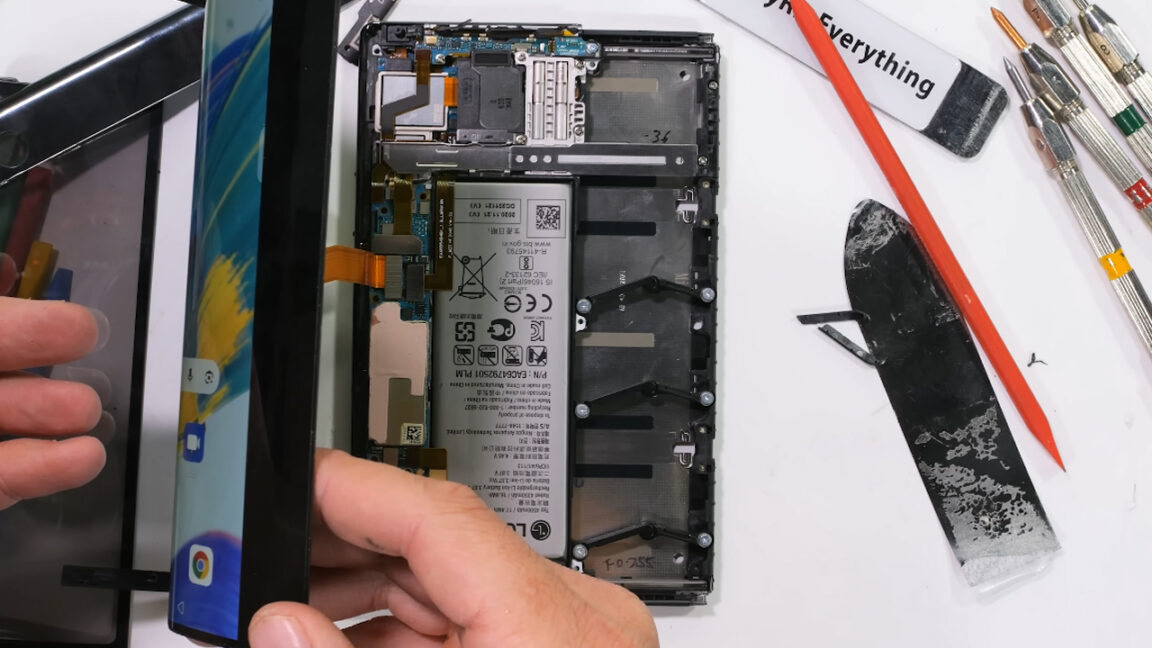
Teardown reveals technical challenges of LG Rollable prototype smartphone
Teardown reveals technical challenges of LG Rollable prototype smartphone
A teardown of LG’s unreleased Rollable smartphone prototype reveals the technical intricacies of its motorized extendable display, a design that never reached commercial production. The analysis underscores the engineering hurdles—including mechanical complexity and cost—that likely contributed to the abandonment of rollable phones, despite concurrent advancements in foldable screen technology.
Source Analysis
The original Ars Technica article exhibits a moderate-to-strong editorial slant, using **loaded language** to frame the LG Rollable as a flawed or doomed concept rather than a neutral technical exploration. It **omits key context** about the prototype's potential unresolved challenges (e.g., reliability, mass production) and leans heavily on a **skeptical, almost dismissive tone** toward rollable phones, emphasizing cost and complexity as insurmountable barriers. The framing positions the device as a 'why this failed' story rather than a 'here’s what we learned' analysis, with subtle appeals to **tech-savvy cynicism** (e.g., 'phone destroyer,' 'never took off').
View Article
NASA’s Orion spacecraft to conduct lunar flyby with crewed observation of Moon’s far side
NASA’s Orion spacecraft to conduct lunar flyby with crewed observation of Moon’s far side
NASA’s Orion spacecraft, with a four-person crew, will conduct a lunar flyby on Monday, coming within 4,000 miles of the Moon’s far side—the closest human approach since 1972. The mission includes live observations and data collection, with a public webcast beginning at 1:00 p.m. ET. The flyby tests systems for future deep-space missions while providing new perspectives on the rarely seen lunar hemisphere.
Source Analysis
The original Ars Technica article leans toward *engagement-driven framing* with subtle emotional appeals and a focus on novelty ('first in-person look') rather than technical context. While not overtly biased, it omits key details about mission objectives and system testing, instead emphasizing spectacle and historical comparisons. The neutral version provides broader context and avoids loaded phrasing like 'humanity's first in-person look,' which implies a more dramatic narrative than the technical reality.
View Article
White House proposes NASA budget reduction amid lunar mission progress
White House proposes NASA budget reduction amid lunar mission progress
The White House has proposed a 23% cut to NASA’s budget for fiscal year 2027, released two days after the agency launched a crewed lunar mission. The proposal will be reviewed and modified by Congress, which previously rejected a similar reduction last year.
Source Analysis
The original Ars Technica article exhibits a strong partisan lean by framing the NASA budget cut as a direct attack by Trump, using emotionally charged language, and omitting contextual details that could soften the perceived impact. The neutral version removes subjective phrasing, avoids assigning blame, and presents the budget process as procedural rather than adversarial, resulting in a more balanced perspective.
View Article